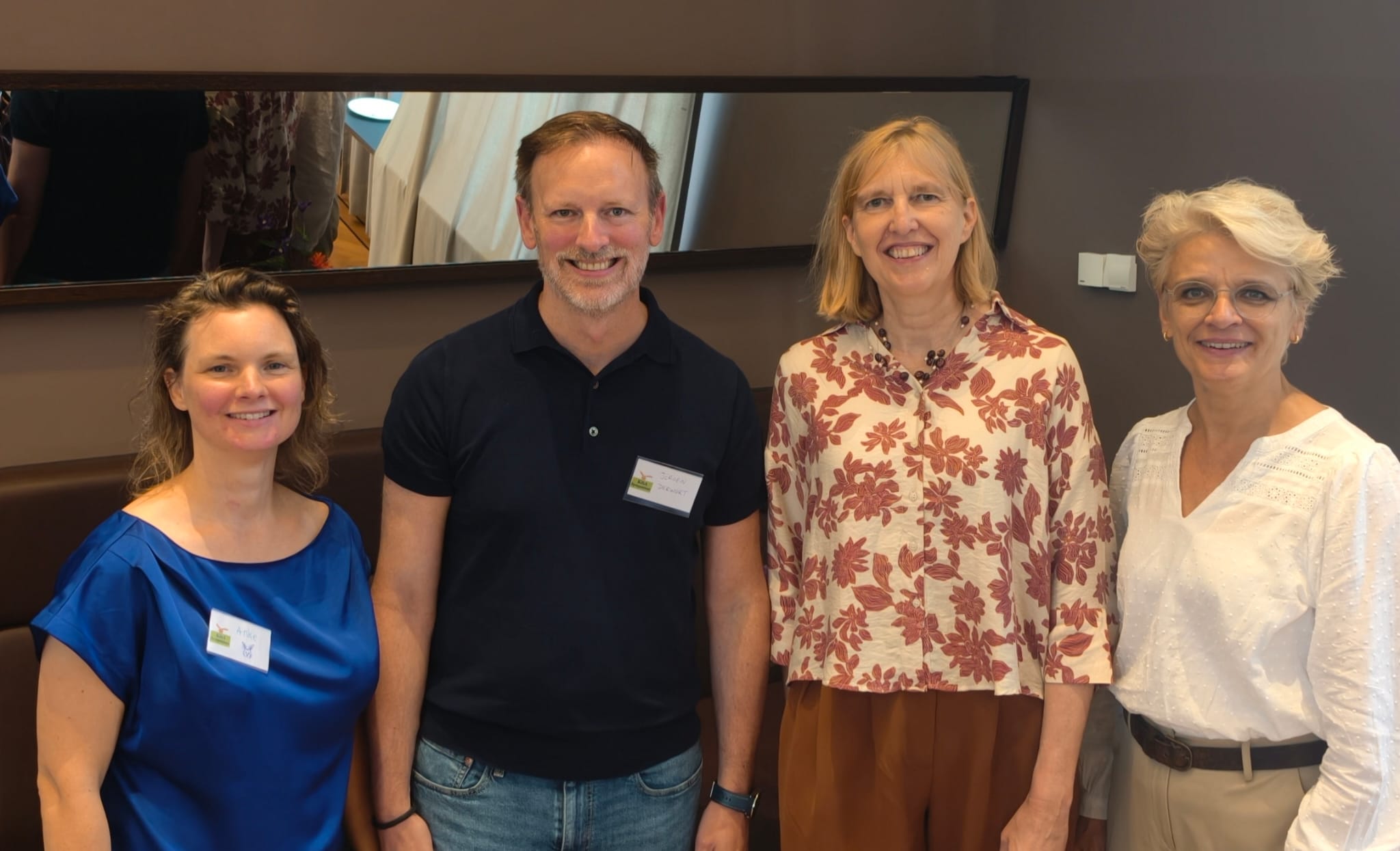
Until 2024, GameLab contributed to the KibA project, led by Professor Anke Klein of Leiden University. The results of its clinical trials were shared at a symposium, which also covered other topics such as selective mutism and low mood in children.
Research into children's mental health and how to improve its treatment has been underway for years, both in the Netherlands and worldwide. Participants at this symposium came from countries including Germany, Australia, Sweden, Belgium and the United States.
The results of various studies were shared, highlighting how many years these require and how difficult the target group is to study.
The symposium presented the main findings of the KibA research and reflected on the past and future. Leading speakers included Professor Susan Bögels of the University of Amsterdam, Professor Lara Farrell of Griffith University in Australia, Professor Maretha de Jonge of Leiden University, and Robin Zimmermann of Ruhr University Bochum.
Participating therapists also shared their personal experiences.
The results of KibA
For KibA, GameLab had helped build an app to facilitate therapy. The app's effectiveness was studied and the findings could now be presented. These showed that the app did not make treatment more effective, but that the parents and children who used it were enthusiastic about it.
The conclusion is therefore mixed: an app is not necessary to deliver effective treatment. However, it was clearly measurable that the app made participating in or following the therapy more enjoyable. That is where its value lies.
The specific improvements GameLab made to the app will probably strengthen this picture further. The app was adapted for use by different institutions and therapists. The interface was also improved visually and small gamification elements were added. Hopefully, this new version can be put into use in the future.
AI as a research aid
Jeroen Derwort, GameLab Manager, attended the symposium and spoke about the way THUAS GameLab works and how this project fitted within it. Maarten and Parminder, students from The Hague University of Applied Sciences, worked on the software in succession. They brought the KibA app up to date and expanded it further.
His advice was twofold:
- put the completed updates into use; and
- carry out the rest of the development with AI support.
Developing the app was a complex and lengthy process, as those involved could confirm. This made its future maintenance uncertain, as funding is needed to continue.
With the rise of AI and specifically agentic programming, it becomes far more likely that the app can be maintained and expanded, even with minimal resources. This development has emerged over the past six months.
The future of the KibA app consequently looks bright, and this could also be a breakthrough for other research projects.