

The world of game development never stands still, but what happens when you challenge a group of Innovative Development students to build a game with as much help as possible from generative AI? The students took on this challenge for GameLab with their project FlipSide.
What is FlipSide?
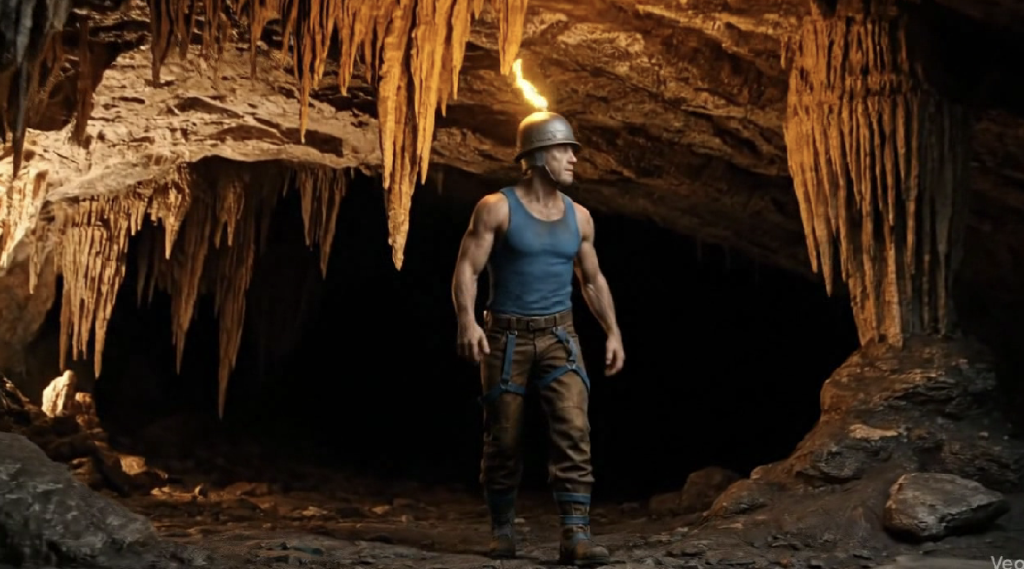
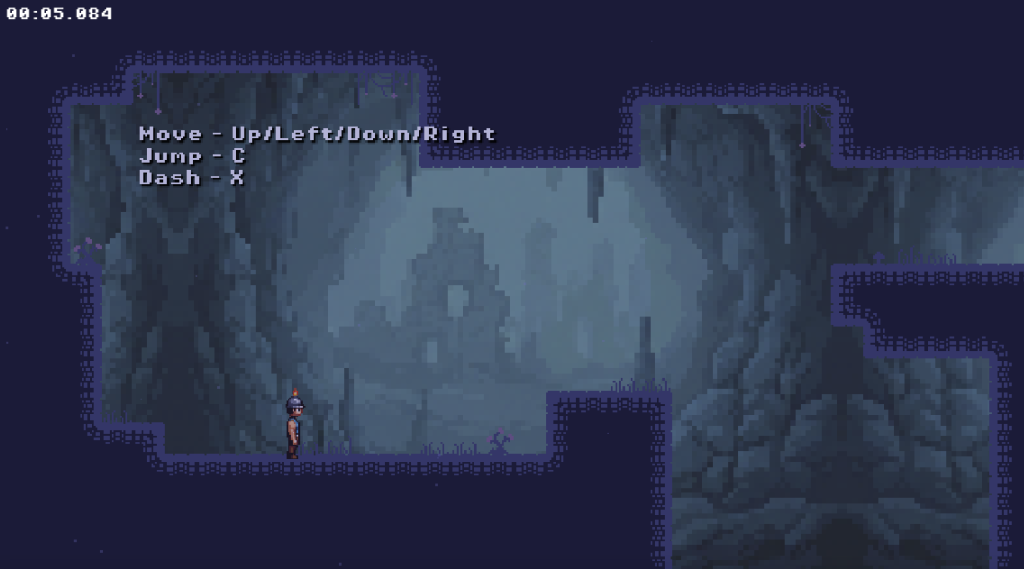
In FlipSide, you play a miner exploring the depths of a mine. The game has an interesting mechanic: the mine exists in two dimensions, the present and the past. You can switch between these dimensions whenever you like to make your way through the levels.
The game has cutscenes, music and challenging controls. A timer appears at the top left of the screen, so you can try to speedrun the game. Tip: if you are fast enough, an extra reward appears.
Play FlipSide in your browser (no download required)
The result is an impressive proof of concept, showing how far the technology has come, but also where human involvement currently remains indispensable.
An impressive first step
FlipSide works extremely well technically, and its core mechanics are solid. When you play, its 64-bit style immediately stands out. From the miner navigating the caves to the imposing golems, the atmosphere is convincing. Yet those very visuals provided the most important lessons about the current state of AI.
What went surprisingly smoothly?
The students found that AI can speed things up enormously, provided you use it in the right places:
- Complex code: Generating and debugging complex code logic proved relatively straightforward and efficient with AI.
- Basic character animations: Once a good basic character design was in place, movements such as “idle” or “jump” could be generated reasonably well using specific animation prompts.
- Specialist tools: The team discovered that general-purpose models, such as standard ChatGPT or Gemini, are less suited to game assets. Using specialist tools such as Pixellab was essential to achieving the required pixel consistency.
The challenges: where did things get difficult?
Despite the speed, the team encountered clear technical bottlenecks showing that a “game made entirely by AI” is still a distant ideal.
- Inconsistent style: AI struggles with visual cohesion. During an attack animation, for example, a golem suddenly became much greener than in its normal state, making it look as though its outfit had changed.
- The “YouTube problem” in video: When creating cutscenes with video models, HUD elements such as health bars kept appearing in the footage. The reason? AI is trained on enormous amounts of gameplay video from platforms such as YouTube, where these interface elements are almost always visible.
- Design logic: While code is logical, game design is often abstract. The technology currently falls short in areas such as level design and the visual cohesion of an entire game world.
The conclusion: a useful assistant, not a replacement
The main lesson from FlipSide is that AI currently serves as a high-quality starting point. It enormously speeds up backend development and the creation of basic assets, but artistic and logical cohesion still require strong direction from the developer. Without human intervention and manual refinement, the result often remains a collection of separate parts rather than a seamless whole.
When asked, the students also said that, despite using a great deal of AI, they still consider this their “own work”. After all, they were firmly in control, sometimes through a prompt and sometimes through a manual adjustment.
Curious about the result of this experiment? You can try the students’ game yourself at flipside.gamelab.tech.
Would you use AI to build a game, or would you prefer to make everything by hand?